
Blocked toilets are a common plumbing problem in homes and workplaces. If your toilet is clogged, your toilet water isn’t draining, or you are dealing with a repeatedly blocked toilet bowl, spotting the warning signs early can help prevent more serious plumbing issues.
In many cases, toilet clogging starts with minor symptoms, such as slow drainage or unusual sounds, before becoming a complete blockage. This guide explains how to spot the signs of a blocked toilet, the different types of toilet blockages, how to unclog a toilet, and when to call a professional 24-hour emergency plumber.
What Are the Signs of a Blocked Toilet?
When there is a potential blockage, your toilet will start to show signs as the blockage begins to develop. Recognising these signs early can help you avoid a complete blockage and reduce the risk of damage to your home or workplace.
Water Draining Slowly After Flushing
If the water disappears more slowly than usual, this may suggest a partial blockage toilet issue developing inside the pipework.
Rising Water Levels in The Toilet Bowl
While the water may eventually settle, repeated rising levels can suggest toilet clogging deeper in the drainage system.
Gurgling Sounds
Gurgling sounds after flushing are often caused by trapped air inside the drainage system caused by a blockage in the toilet waste pipe.
Lingering Unpleasant Smells
Persistent bad smells around your toilet may indicate trapped waste or standing water caused by a blockage in the drainage system.
Overflowing Water or Overflowing Gully Trap
Water overflowing from the toilet bowl or an outdoor gully trap should be treated as urgent. These signs can suggest a serious blockage in the toilet waste pipe and may require immediate professional attention.
Obviously, water anywhere outside of the piping can cause major damage to your property which is why it is important to contact a 24-hour plumber to fix the toilet as soon as possible.
What Are the Types of Toilet Blockages?
Not all toilet blockages are the same, and understanding the type of problem affecting your toilet can help you identify the right solution more quickly. The symptoms can often point to the cause of the problem.
Below are the three most common types of toilet blockages and the warning signs to look out for.
Partial Toilet Blockage
A partial blockage toilet issue happens when waste can still pass through the pipes, but not efficiently. You may notice slow draining water, occasional gurgling sounds or temporary rising water levels.
Complete Toilet Blockage
A complete blockage happens when water cannot pass through the system at all. If your toilet water is not going down, continues to rise or threatens to overflow, your toilet is likely clogged completely.
Blockage in the Toilet Waste Pipe
Sometimes, the problem sits deeper in the drainage system rather than in the toilet itself. A blockage in the toilet waste pipe may cause repeated toilet clogging, overflowing drains outside and unpleasant smells around the property.
How to Prevent a Blocked Toilet
Plumbing problems happen, but with some simple blocked toilet solutions, you can reduce the occurrence of problems in your home or workplace bathroom.
Only Flush Toilet Paper and Waste
Avoid flushing wet wipes, sanitary products, cotton wool or paper towels. These are some of the most common items we find when we’re called out to a customer suffering with a blocked toilet or drain.
Avoid “Flushable” Wipes
Many wipes do not break down as easily as toilet paper and may increase the chance of a blocked toilet bowl over time, despite being advertised as “flushable”.
Keep Limescale Under Control
Regularly cleaning your toilet with appropriate products can help reduce build-up inside the toilet and pipework. This goes for toilets that are both well used or never used as either can promote limescale development.
Watch for Early Warning Signs
If your toilet is draining slowly, making unusual sounds or producing bad smells, act early before the issue worsens, don’t wait until you’re unable to ignore it.
Arrange Professional Maintenance for Recurring Problems
Repeated toilet clogging may indicate a hidden drainage issue, you’re always better to have a professional visit your property to ensure there’s no signs of damage or build up in the pipework.
What Is the Best Way to Unclog a Toilet?
It is best to act fast when you notice any signs of a blocked toilet. With simple problems, you can use easy methods like a plunger, or toilet auger, but with a more serious problem, an expert may be required.
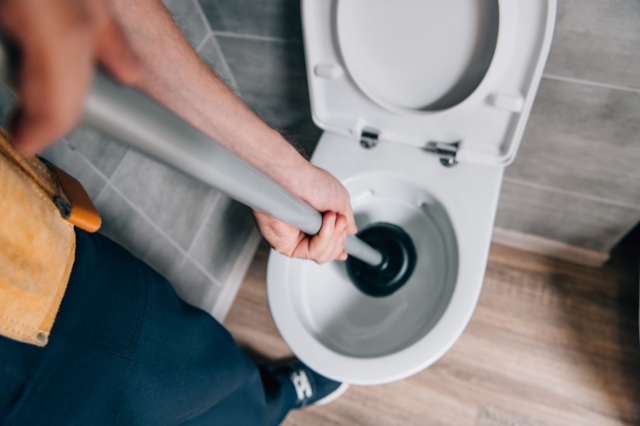
Using a Toilet Plunger
A plunger is often the quickest way to clear a minor blockage in the toilet bowl, particularly if your toilet is draining slowly or the water level rises after flushing.
To use a plunger:
1. Make sure there is enough water in the bowl to cover the rubber cup of the plunger.
2. Position the plunger over the drain opening to create a seal.
3. Push down gently at first, then plunge firmly up and down for 15–20 seconds.
4. Remove the plunger and wait to see if the water drains normally.
5. Flush carefully to check whether the blockage has cleared.
If your toilet is still clogged after a few attempts, the blockage may sit deeper in the pipework.
Using a Toilet Auger
For deeper blockages, a toilet auger can help remove debris further inside the pipe when a plunger has not worked.
To use a toilet auger:
1. Insert the auger carefully into the toilet drain opening.
2. Turn the handle slowly to guide the cable through the pipe.
3. Continue turning until you feel resistance from the blockage.
4. Gently rotate the auger to break up or hook onto the obstruction.
5. Pull the auger back slowly and flush the toilet to test drainage.
6. A toilet auger can be useful for stubborn blockages caused by trapped debris, but recurring toilet clogging may indicate a deeper blockage in the toilet waste pipe.
How to Unblock a Toilet Without a Plunger?
If you do not have access to a plunger or other drain devices, then there are simple ways to solve a blockage using household items. Our recommended at home method is to:
1. Remove excess water from the toilet bowl if possible.
2. Add up to half a cup of washing-up liquid.
3. Leave it for 10–15 minutes.
4. Slowly pour warm (not boiling) water into the bowl.
5. Flush carefully to test whether the blockage has cleared.
This method may help clear a partially blocked toilet caused by toilet paper or minor build-up.
However, severe blockages and problems that persist may require an emergency plumbing expert from Drain Doctor. We can help diagnose and fix the problem while minimising any damage to your home.
WARNING - If your toilet connects to a cesspit or septic tank, you should not attempt any DIY method yourself, instead you can contact our professional team at Drain Doctor to empty a full tank and to avoid damaging the system.
Will a Blocked Toilet Clear Itself?
Sometimes yes, it is possible for toilet blockages to clear themselves. Some minor toilet blockages caused by toilet paper may gradually break down, but wipes, sanitary products and foreign objects usually will not.
However, if your toilet water is not going down, the problem keeps returning, or water levels continue rising, the blockage is unlikely to clear itself and may require professional help.
When Should You Call a Professional Plumber?
While some minor toilet blockages can be cleared using DIY methods, more serious or recurring issues should be checked by a professional plumber to prevent further damage to your drainage system.
You should contact a professional plumber if:
• Your blocked toilet bowl is overflowing or close to overflowing
• Your toilet is not draining after multiple DIY attempts
• Your toilet keeps clogging repeatedly, even after clearing it
• You notice an overflowing gully trap or wastewater outside the property
• Multiple drains, sinks or toilets in the building are draining slowly
• You suspect a blockage in the toilet waste pipe
• Your property is connected to a cesspit or septic tank
Toilets Connected to Cesspits or Septic Tanks
If your toilet is connected to a cesspit or septic tank, extra care should be taken when dealing with blockages. A full tank, damaged drainage field or system imbalance can sometimes cause your toilet water not to go down properly or lead to repeated toilet clogging.
Avoid using harsh chemical drain cleaners or repeatedly flushing a blocked toilet, as this may damage the system or make the issue worse. If you suspect your septic tank or cesspit is full, it is best to contact a professional to inspect and empty the system safely.
Need an Emergency Plumber? Call Drain Doctor
If you have an emergency, whether it is a burst pipe, blocked toilet or faulty shutoff valve, Drain Doctor is available 24 hours a day, 365 days a year. We are here whenever you need us, even on bank holidays, weekends and late nights.
- Visit our plumbing page
- Put your postcode into our ‘Find your local engineer box’
- Complete the contact form or give us a call.
No job is too big or too small. Contact our team to arrange a toilet unblocking service.